

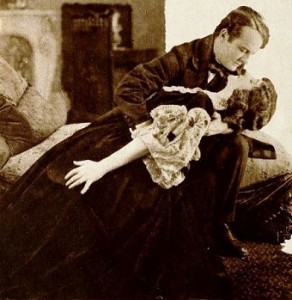
My Romance
“And thus began my ‘hero’s journey’ – alone in a foreign country with no job, no car, not knowing enough of the language, no support system, savings dwindling, a broken marriage, trampled self-esteem, and racked with shame and disappointment.”
This is where we left off at the end of Wherever I Go, There I Am, Part 1. I will eventually talk about what happened after that and the entire process and journey that led me to “finding my a$$ with both hands.” But for now, let’s flash forward about 5.5 years to the present day.
I met the most amazing man! When I think of all of the things that had to line up and occur over the past 10 years (including meeting my ex-husband and my whole world inevitably falling apart) in order for Ben and I to find each other, it feels like nothing short of a miracle.
My life partner is someone who I couldn’t have conjured if I’d tried – “on paper” he’s the perfect blend of left and right brain (archaeologist, scholar, and musician). He looks like a “bad boy” but I’ve never met someone more kind, generous, and loving. And it’s all the things that are not “on paper” that make him so right for me.
There’s a certain quality about our relationship that not only includes trust, connection, openness, respect, and affection, but also the kind of “mind reading” and being on the same wavelength that makes us feel like kindred spirits. Almost daily, one of us will quip with a smile, “Get out of my head!”
As I’ve continued on my learning journey down the Jungian psychological typology path, I began to wonder, “As an ENFP, why on earth does my relationship with an ESTJ work so well?”
Not that I want to question it, mind you, but according to the type attributes that I’ve read about, one might believe that we’re doomed. That there are too many conflicts within our personality types for us to truly “get” one another. Or, at the very least, this partnership would be a very difficult uphill battle. So what gives?
Jung’s Romance
Ben and I actually took the Majors PT-Elements™ personality assessment individually and discovered that our personalities are, on the surface, opposites. In fact, I was shocked to hear that, statistically, there’s only about a 16% survival rate for relationships with only one letter (one aspect of type) in common!
To find out how it’s possible that I can be in such a fulfilling and easygoing relationship with someone who is virtually an opposite, I went to our resident expert on type, Gary Monti, and we did a podcast on Jungian personalities in relationships using our assessment results as a framework. Gary walked me through the reasons why it has been possible for my partner and I to form such a solid, positive relationship.
Gary explains that it’s very easy to “label” people based on native type and not delve deeper. When you get the full story of a person, it becomes apparent that the nuances of personality affect how they actually and fully operate in the world and in relationship with self and others. In the case of my specific romantic relationship, Ben and I choose to delight in our diversity – rather than throwing “you should be like me’s” at each other.
We do have some areas of tension, as all couples do – and we communicate about them respectfully and don’t try to change the other person. Or we poke fun at each other while accepting our differences and navigating them. We learn from each other, and it’s not always easy.
Gary stresses that the “spirit” of how one comes to the assessment is critical. The purpose is to delve into each other’s personalities – not for “getting the goods” on the other person or using their scores against them. The approach should be about humility and vulnerability, and being willing to make some changes. There is space for the couple to discuss the difficulties they’re having AND to celebrate each other. This principle applies as well to families and business teams.
Gary discusses specific areas in which Ben and I score similarly, despite our different whole types, and we discover that it is these areas of overlap that contribute to our sense of being completely understood and accepted by the other partner. These meshes are, in fact, what allow us to risk being fully open with each other. This openness, in turn, creates a sense of safety that takes the relationship further and deeper than any other relationship in which we’ve each been.
The 8 Majors Jungian Process Scores
Gary goes on to discuss the real-time measures of the 8 Majors Jungian Process Scores. This is a measure that no other Jungian-based personality type assessment uses! It addresses the 4 ways we can get information and the 4 ways we process information. Our individual results showed that both Ben and I scored similarly on Insight (Introverted Intuition). This is one more example of how whole type is not a prison sentence, in that one wouldn’t necessarily expect such a high score in this area from an ESTJ. This common ground created a quick and early bond between us as we created a world of meaning – having serious conversations about everything. It’s a deep behavior, so we entwine very readily on this.
Extraverted Feeling, the ability to relate, is also high in both of us. Instead of getting angry at each other, Ben and I get curious about each other. We approach each other with admiration. Our differences enhance our lives when one person more readily draws from a different pool of strength. It makes us a better team as we offer each other’s competencies as complements in order to move towards our collective goals.
This piece of the Majors PT-Elements™ assessment can actually be used to indicate where some personal work would really pay off in enhancing a relationship. Hope can be offered to clients with these 8 process scores to be able to DO something about any issues of concern or conflict.
Some Words of Caution and Encouragement
Gary points out that it’s dangerous to pigeonhole people by their native whole type. An unethical example of this misuse would be in hiring or firing situations in organizations. Jungian assessments are not to be used as screening tools for hiring. Using them in this way could, for example, completely illegitimately exclude someone from jobs when they may have just had a recent negative experience that has nothing to do with how they would interact with a new team.
These personality assessments are meant to encourage the person to be open about themselves in the presence of a life coach, change manager, therapist, teammates, spouse, etc. Bottom line: it’s a discovery tool – not a screening tool.
Thank you, Gary, for helping Ben and I understand, in the true spirit of diversity, WHY our relationship works so well! It’s extremely powerful to find out who you really are and use that knowledge in personal and business relationships to help improve human interaction on so many levels.
Listen to the full podcast here for more details and to find out more about how the Majors PT-Elements™ could help you better connect with yourself, your partner, your family, or your business teams.
Do you have your own story about personality type in your relationships? If you’d like to share your story on our blog because you think it could help others and build connection, please contact Jennifer (also our Blog Editor) at jennifer.rojas@aureliuspress.com.